
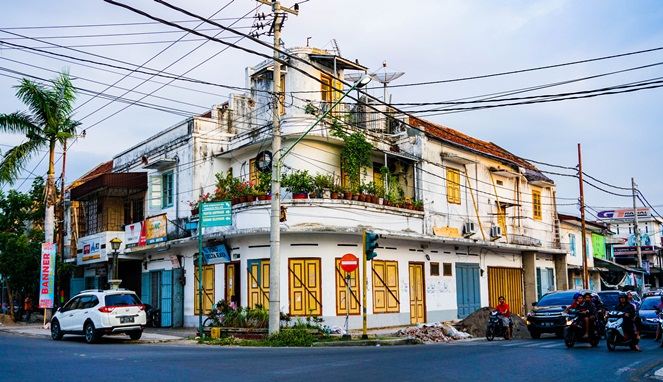
Ampenan has been a central meeting point for fishermen and traders from all over Indonesia since the early 14th century.
Today, the city still bears the hallmarks of it’s more recent colonial past, when it was a major stopping point for cinnamon and cloves shipments from the eastern-most parts of the archhipelago, bound for the new world
Although all major port activities were shifted to nearby Lembar in the 1970’s, Ampenan is still a bustling town, with it’s mix of colonial architecture and cultures from around Indonesia, the Middle East and China still living and trading here, offering a wide variety of shopping food and nightlife.
The word Ampenan comes from the word “Amben” which means “Heaven”. Today, the population of Ampenan city consists of various ethnic communities, such as Chinese, Arabs, Malays and Bugis. On one side of the main street, Yos Sudarso are a number shops which belong to local Chinese traders. On the other side, is a row of shops belonging to the Arab community who sell goods from the Middle East. As you move from street to street you will see evidence of the different communities reflected in what is offered for sale in the shops and especially in the food sold in the restaurants and cafes.
As well as the many Dutch Colonial buildings, and lively trader community, the Museum of West Nusa Tenggara gives a great overview of indigenous Sasak culture and the history of Lombok. Ampenan also has a black-sand beach well known for it’s beautiful sunsets. On any given night, locals flock to the foreshore to eat roasted corn or to sit at one of the many foreshore cafes and take in the gorgeous panorama of sun setting over the sea. One can also see the ruins of an old pier which was built during the Dutch around 1948 -1950. The pier is presently a popular fishing location.